
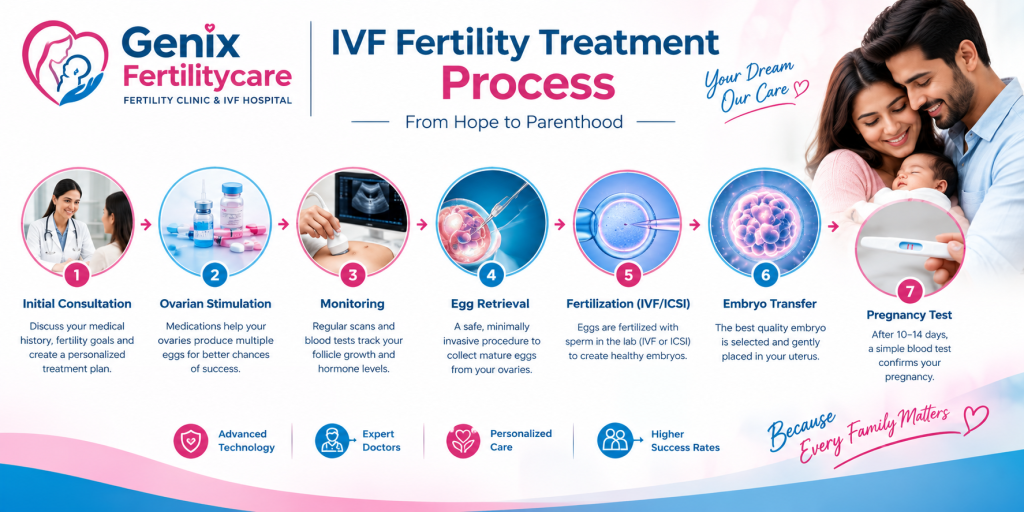
For couples experiencing difficulty conceiving naturally, In Vitro Fertilization (IVF) can offer an additional option on their journey toward parenthood. Understanding the IVF Fertility Treatment Process helps individuals and couples prepare for treatment, understand the different stages, and make informed decisions about their reproductive health. Genix Fertilitycare focuses on personalized fertility care, helping patients understand available treatment options with guidance from qualified medical professionals.
What Is IVF Fertility Treatment?
IVF is an assisted reproductive technology in which eggs are collected from the ovaries and fertilized with sperm in a laboratory. The resulting embryo may then be transferred into the uterus to establish a pregnancy. IVF may be recommended for certain fertility conditions, including blocked fallopian tubes, some cases of male-factor infertility, ovulation disorders, or unexplained infertility.
The appropriate treatment depends on individual medical history, fertility investigations, age, and other relevant factors.
Step-by-Step IVF Treatment Process
- Fertility Consultation and Evaluation
The IVF journey typically begins with a consultation. The fertility specialist reviews the couple’s medical history and may recommend blood tests, hormonal investigations, ultrasound scans, and semen analysis to assess reproductive health.
- Ovarian Stimulation
Medications may be prescribed to stimulate the ovaries to develop multiple mature eggs. During this stage, ultrasound scans and blood tests help the medical team monitor the response and adjust treatment when necessary.
- Egg Retrieval
When the eggs are ready, they are collected through a medical procedure performed under appropriate sedation or anesthesia. The procedure is generally completed in a short period, followed by recovery and medical observation.
- Fertilization in the Laboratory
The collected eggs are combined with sperm in a laboratory. In selected cases, a technique called intracytoplasmic sperm injection (ICSI) may be used to inject a single sperm directly into an egg. Fertilization and embryo development are then monitored by the embryology team.
- Embryo Transfer
A suitable embryo may be transferred into the uterus using a thin catheter. Depending on the treatment plan, fresh or frozen embryo transfer may be considered. The number of embryos transferred is determined according to clinical guidance and applicable recommendations.
- Pregnancy Testing and Follow-Up
A pregnancy blood test is performed at the time recommended by the fertility specialist. The medical team provides guidance on medications, follow-up appointments, and the next steps based on the result.
IVF Treatment at Genix Fertilitycare
At Genix Fertilitycare, patients can discuss their fertility concerns, understand the IVF process, and explore treatment options suited to their individual circumstances. Clear communication and personalized medical guidance are important throughout fertility care.
Conclusion
The IVF fertility treatment process involves several carefully monitored stages, from initial evaluation to pregnancy testing. Although IVF can help many people experiencing infertility, success rates vary depending on individual circumstances, and pregnancy cannot be guaranteed. Consulting a qualified fertility specialist at Genix Fertilitycare can help you understand your options and take an informed step toward parenthood.